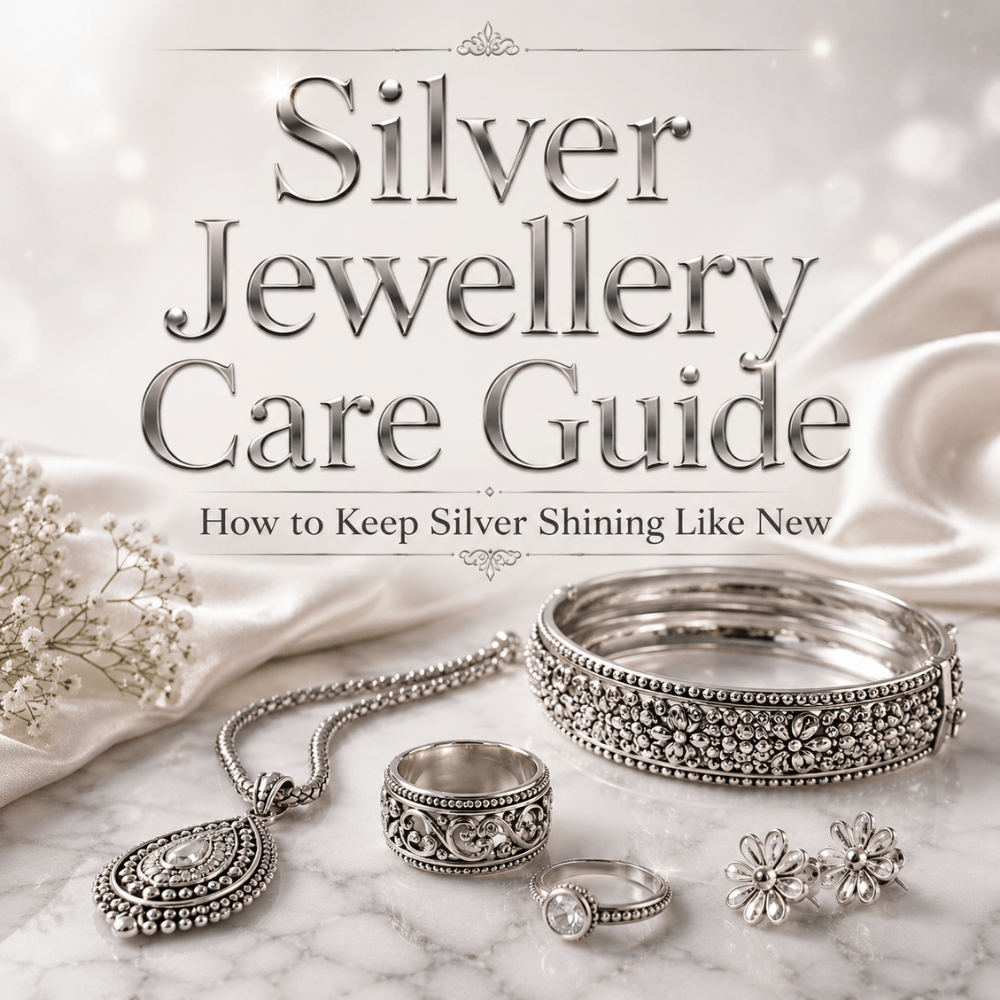
Silver Jewellery Care Guide — How to Keep Silver Shining Like New | Swarn Kriti 2026
Silver Jewellery Care Guide — How to Keep Silver Shining Like New
Introduction — Silver Deserves More Love
Silver jewellery occupies a unique and beloved place in Indian culture. From payal and bichhiya worn daily to elaborate silver puja sets, silver thali sets, and oxidised silver fashion jewellery — silver is everywhere. Yet it gets far less care and attention than gold.
The result? Beautifully crafted silver pieces that turn black, dull, and lifeless within months of purchase. Silver tarnishes faster than gold — that is simply its chemistry. But tarnish is not damage. With the right care, every silver piece can be restored to its original brilliance, and with consistent maintenance, can stay shining for decades.
This complete silver care guide covers cleaning methods, storage secrets, daily habits, and professional care tips — so your silver always looks the way it deserves to.
Why Does Silver Tarnish? The Science Behind the Dullness
Silver tarnishing is a natural chemical process called oxidation. Sterling silver (92.5% pure, hallmarked as 925) contains a small percentage of copper, which reacts with sulphur compounds in the air — from pollution, humidity, certain foods, and even human skin — to form silver sulphide. This is the black layer you see on tarnished silver.
Factors that accelerate tarnishing:
High humidity — bathrooms, coastal areas. Air pollution — sulphur dioxide is particularly reactive. Skin contact — some people's skin chemistry tarnishes silver faster. Perfumes, hairspray, lotions — chemicals react with silver. Rubber bands and plastic bags — both contain sulphur compounds. Certain foods — eggs, onions, mustard contain sulphur.
Understanding these triggers helps you prevent tarnish before it forms — the smartest approach to silver care.
Cleaning Methods — From Gentle to Deep Clean
Method 1 — Warm Water & Dish Soap (Weekly Maintenance)
Best for daily-wear silver pieces with light tarnish.
Mix warm water with a few drops of mild dish soap. Soak the piece for 10–15 minutes. Gently scrub with a soft toothbrush, paying attention to crevices. Rinse under clean running water. Dry immediately and completely with a soft lint-free cloth — never leave wet.
Result: Removes surface oils, light tarnish, and daily grime.
Method 2 — Baking Soda & Aluminium Foil (The Magic Method)
Best for heavily tarnished silver — removes stubborn black tarnish almost instantly.
What you need: A bowl lined with aluminium foil (shiny side up), boiling water, 1 tablespoon baking soda, 1 tablespoon salt.
Place aluminium foil in bowl — shiny side up. Place tarnished silver pieces on the foil. Pour boiling water to cover the pieces. Add baking soda and salt — the reaction will begin immediately (fizzing is normal). Leave for 5–10 minutes — watch the tarnish transfer from silver to foil. Remove, rinse thoroughly, and dry completely.
This is electrochemical magic — the aluminium attracts the sulphur from the silver, reversing tarnish without any scrubbing.
Method 3 — White Toothpaste (Quick Spot Fix)
Best for small tarnished spots on plain silver.
Apply a small amount of non-gel, non-whitening white toothpaste to a soft cloth or toothbrush. Gently rub on the tarnished area in circular motions. Rinse clean and dry.
Caution: Toothpaste is mildly abrasive. Use sparingly and never on antique, oxidised, or intricate silverwork where the dark patina is intentional.
Method 4 — Silver Polish Cloth
Best for regular maintenance and light polish.
A silver polishing cloth contains micro-abrasives and anti-tarnish agents. Gently wipe the silver piece in straight strokes — do not rub in circles. These cloths are ideal for maintaining shine between deep cleans and for polishing chains and simple bangles.
Method 5 — Lemon Juice & Salt (Natural Deep Clean)
Best for plain silver without stones or enamel.
Mix the juice of one lemon with 1 teaspoon of salt. Apply to the silver piece with a soft cloth, gently rub, then rinse immediately and dry thoroughly.
Caution: Lemon is acidic. Never leave silver soaking in lemon juice — rinse within 2–3 minutes. Never use on oxidised silver, gemstone-set pieces, or enamel work.
Special Care — Oxidised, Stone-Set & Antique Silver
Not all silver should be polished bright. Here is how to care for special pieces.
Oxidised Silver Jewellery — Oxidised silver gets its dark, textured look deliberately — the dark areas are part of the design. Never use baking soda, toothpaste, or polishing cloth on oxidised pieces — you will remove the intentional darkening. Care: Wipe gently with a barely damp soft cloth only. Avoid soaking.
Stone-Set Silver — Avoid soaking pieces with glued stones — water can loosen the adhesive. Use a barely damp cloth around stones. Never use the boiling water-foil method for stone-set pieces.
Antique Silver — Antique silver has natural patina that adds character and value. Removing it entirely can reduce the piece's beauty and value. Consult a professional jeweller before deep-cleaning antique silver.
Silver Storage — The Prevention Approach
Individual pouches — Store each silver piece separately in a soft cloth or anti-tarnish pouch. Contact between pieces causes scratches and accelerates tarnish transfer.
Anti-tarnish strips — Place anti-tarnish strips or chalk pieces in your silver storage box. They absorb sulphur compounds from the air, dramatically slowing tarnish.
Silica gel — Silica gel sachets reduce humidity inside the storage box — a major factor in silver tarnishing.
Avoid plastic bags — Never store silver in regular plastic bags — they contain sulphur compounds. Use acid-free tissue, cloth pouches, or anti-tarnish bags.
Wear it often — Interestingly, silver jewellery worn regularly tarnishes less than silver stored for months. Body oils create a mild protective layer.
Frequently Asked Questions
How often should I clean my silver jewellery?
For daily-wear pieces, a gentle clean every 2–4 weeks is ideal. For stored or occasional pieces, clean before wearing and before storing after each use.
Does silver tarnish permanently?
No. Tarnish is a surface reaction that can be fully reversed with the right cleaning methods. Even heavily blackened silver can be restored to its original shine.
What is the best homemade silver cleaner?
The baking soda and aluminium foil method is the most effective and gentle homemade technique for removing heavy tarnish. Warm water and dish soap is best for regular maintenance.
Can I use the same cleaning methods for silver and gold?
Some methods work for both — warm water and dish soap is universally safe. However, the baking soda-foil method is specific to silver. Never use it on gold pieces.
Conclusion
Silver jewellery has the capacity to last and shine for a lifetime — even multiple lifetimes. The payal your grandmother wore, the silver pooja thali from the family home, the oxidised necklace that has travelled across cities — all of these can be restored and maintained with a few simple habits.
At Swarn Kriti, we care for your silver as we care for your gold. Visit us for professional silver cleaning, polishing, and restoration services.
Visit Swarn Kriti for Silver Jewellery Care, Cleaning & Polishing Services | Jaipur's Trusted Jeweller